Monday, September 22, 2014

Date Night: Zodiac

In which I review a randomly-selected movie from Netflix.

I honestly have no idea why I waited so long to watch Zodiac.  I've wanted to see it since it hit theaters in 2007 as the next big film from the director of Fight Club and Se7en.  I didn't watch it in 2008 after Robert Downey Jr. returned to the A-list in Iron Man.  I didn't watch it after blind-buying it in 2009, nor after Mark Ruffalo became a household name in the wake of The Avengers' unprecedented success.  I waited until it was streamable on Netflix, and even then I waited over a year before I sat down to watch it.
Zodiac, based on Robert Graysmith's 1986 novel, opens during the Zodiac Killer's murder spree across 1960's California.  While San Fransisco Chronicle reporter Paul Avery's coverage of the murders puts him at odds with homicide detectives Dave Toschi and William Armstrong, anti-social cartoonist Robert Graysmith becomes just as fascinated with the killer's reign of terror as he is horrified by it.  When victims stop piling up in the early 1970's, however, the public loses interest; Paul Avery is fired from the Chronicle, detective Armstrong transfers out of homicide and Detective Toschi moves on to other cases.  Despite the incredulity of the police and the concern of his wife, Robert Graysmith launches his own private investigation into the murders to uncover the identity of the Zodiac.

Rightly praised for its accurate recreation of the investigation surrounding the murders, Zodiac plays out more like a History Channel dramatization than a thriller built around a real-life Hannibal Lecter.  The characters are used less for their dramatic interactions as they are for their reactions to what the unseen antagonist does.  Greysmith's son seems to only be included because of the killer writing to the newspaper that "school children make nice targets.  I think I shall wipe out a school bus some morning.  Just shoot out the front tire [and] then pick off the kiddies as they come bouncing out."  Avery has a wife that briefly speaks from the other end of a telephone and is only mentioned again after she kicks him out of the house (presumably because of Avery's increasingly antagonistic and erratic behavior towards the police investigation).  Toschi's wife exists purely to be annoyed when Graysmith wakes her and her husband up in the middle of the night with another Zodiac theory while Graysmith's wife only seems to exist to steal their kids away to her mother's as Graysmith becomes more and more obsessed with the identity of the Zodiac killer.
Paul Avery (left) and Robert Graysmith (right)
Coming in at over two and one half hours, Zodiac's methodical pacing causes the film to drag where similar films seem to fly by.  The decision to cover the whole of the Zodiac's twisting investigation over three counties and two decades, though admirable, makes for a cumbersome and unwieldy film.  Given how superfluous Graysmith's inclusion is in the first half of the film and how equally superfluous Avery's inclusion is in the second half, the film as a whole would have strongly benefited from cutting one or the other character out entirely: focusing on a single one of their investigations alongside Toschi's.  This would have allowed the film to more thoroughly explore the unfolding drama of the lives of those effected by the murders in a more-efficient 2 hour run-time: more than enough time to explore the details of an unsolved serial killing.

Although well-written, well-acted and well-directed, Zodiac is a film that is far less than the sum of its parts.  Its sole concern with solving the mystery of the killer fails to allow it to delve into the lives of those that he affects: the surviving victims and terrified families worried that their children will be used for target practice on their way to school.  Although ambitious, it's ultimately average.  I give the film a solid 7, while Becky gives it a 6.
The banality of evil: the alleged Zodiac killer.

Friday, September 19, 2014

Unreality Companion: The Meta-Fictional Necessity for Marvel's Agents of S.H.I.E.L.D. in the MCU

In which I develop on the content of my weekly Unrealitymag.com article.

In my Unreality this week, I addressed the most important reason for Marvel's Agents of S.H.I.E.L.D. - a show that seemed a popular lightning rod for ridicule and complaint last year - existing: it's good.  Not just good, but just short of the best series currently on television (just behind Game of Thrones and Attack on Titan).  Here, I will address the second most important reason: it's necessary.
Not too long ago, Moviebob asked whether Marvel was "big enough to go small," referring to the upcoming Netflix series as being proof that Marvel has the ability and desire to make use of their entire canon: that they are willing to do justice to unproven characters like Iron Fist or breath life into failed ventures like Daredevil when all they really need for a successful business model is to sit back and let Iron Man, Thor and the rest of The Avengers rake in money hand over fist.  And while I agree completely with his enthusiasm at the projects, he fails to address the obvious fact that Marvel has already done this with Agents of S.H.I.E.L.D.

Think about it: before The Avengers, how many people really, honestly cared about S.H.I.E.L.D. enough to tune in every Tuesday to see what superpowered shenanigans they're thwarting this week.  Now remove Nick Fury from the equation - whose post-credit cameos have been a marvel mainstay since Iron Man.  Instead of the badass, cylopic super spy that everybody loves behind a gun, replace him with a middle-aged, balding, bit-player from Phase 1 played by a forgettable, television actor who's largest non-Marvel success is a low-budget, black-and-white Shakespeare adaptation that nobody really cared enough about to see in theaters.  Need something to sweeten the deal further?  He died during The Avengers.  Sounds like an awesome show, right?
Despite never getting behind this method of thinking, I'd be an idiot to claim that Agents of S.H.I.E.L.D. wasn't a hard sell and didn't have an uphill battle for finding a proper audience.  It began as a gamble to see if Marvel's Cinematic Universe was indeed "big enough to go small" - if it could take characters and properties that lacked a hard-and-fast mainstream audience and make them a mainstream success.  Would the same audience that made The Avengers top-dog at the box office make Agents of S.H.I.E.L.D. top dog with the ratings?

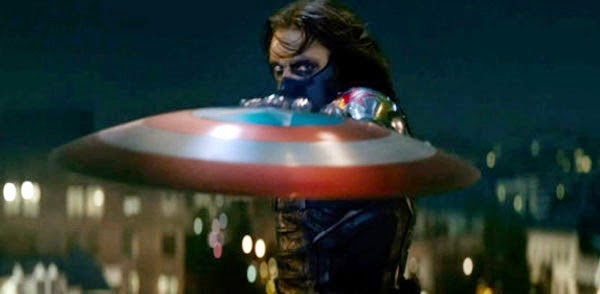
The answer is yes and no.  While it was far from the financial powerhouse for ABC that its predecessor was for Disney, it didn't wash out after one season.  Season 1 was a masterpiece of Whedon's executive oversight, a pitch-perfect cast and consistently high-quality writing, and Season 2 (which premieres on September 23rd) is looking to hold just as much promise.  While public sentiment seemed to be decidedly against it from the beginning, that largely seemed to turn following the events of Captain America: The Winter Soldier, which brought S.H.I.E.L.D. - and, subsequently, Agents of S.H.I.E.L.D. - out of the shadows and into the light (Hail Hydra).
Hail Hydra.
And if you think for a second that Disney would gamble good money on 4 series and a mini-series cross-over without Agents of S.H.I.E.L.D. paving the way for it first - proving that it could not just be done, but done both well and profitably - then you're missing the point.  While Marvel's basically willing to gamble on anything - need I mention Guardians of the Galaxy - Disney's a bit stingier than that.  They wouldn't risk Mickey-earned profits on a failed film franchise like Daredevil, blaxploitation like Luke Cage, asiansploitation like Iron Fist and an Alias reboot like Jessica Jones if Marvel couldn't prove that there was a profitable audience for its lesser-known properties.

Beyond being the sole reason for Marvel's further expansion into television through Netflix, the show proves that it holds an even deeper necessity within the MCU.  It meaningfully ties into and expands upon the events of the MCU's film canon.  Through it, we see a more comprehensive view of the fallout from the Battle of New York than any Phase 2 film has been able to give us.  We see the clandestine demand for Chitauri technology: a mad scramble to get as much as you can before either S.H.I.E.L.D. or the competition beats you to it.  We see Chitauri viruses ravage unprepared human populations due to simple exposure in New York.  We see their technology fused with Extremis, gamma radiation and Erskine's SSR formula into a new breed of cybernetic super soldiers.
Project Deathlock
Agents of S.H.I.E.L.D. is a staging ground to test and develop new ideas that can be potentially introduced to the films in Phase 3 and beyond.  We were introduced to Jasper Sitwell before his big screen introduction, watched him develop over several episodes as a high-ranking agent and key player within S.H.I.E.L.D. and then watched him depart for his duties aboard the Lemurian Star (the same ship that Cap' rescued him from in The Winter Soldier).  We were introduced to the Asgardian ex-patriot Elliot Randalph and the escaped Asgardian convict Lorelei in the wake of Malaketh's attack on Greenwich and assault on Asgard.  Scorch, Blizzard, Graviton, Deathlock - all villains introduced in the series that could potentially migrate to the big screen.

Marvel's Agents of S.H.I.E.L.D. is the connective tissue that binds the MCU together.  Through it, we see a much more complete timeline of the events of the films: the broader scope of Hydra's insurrection, Director Fury's immediate destination after his supposed death in The Winter Soldier, the aftermath of New York and Greenwich and the results of projects Deathlock and Centipede.  It ties up the loose ends leftover from the films in the exact same way that Marvel's One-Shots do - expanding and exploring the cinematic universe with increasing rapidity, fleshing it out in the ways that only "going small" allows.


Monday, September 15, 2014

Diamond in the Rough: Batman: Assault on Arkham

In which I review an obscure, must-see film.

You're probably going to see a lot of posts like this popping up in the future: new article series that will both debut and be developed as they're needed (basically whenever I happen to watch something that fits their criteria).  The main three (Date Night, From the Vault and Unreality Companion) will still be just that: my main, go-to article series.  Just expect to see more versatilely-themed and differently-focussed posts in the coming weeks.
                    
Sometimes I feel like a bad nerd.  If you would have asked me about Batman: Assault on Arkham a week ago, I would have guessed that it was a video game.  If you would have asked me who Deadshot, Captain Boomerang, Black Spider, King Shark, Killer Frost  and KGBeast were, I would have guessed that they were carnies.  If you would have asked me who The Suicide Squad was, I would have guessed it was an off-shoot of Al Qaeda.

Batman: Assault on Arkham, an adaptation of DC's Suicide Squad comics, follows a government-run team of incarcerated C and D-list supervillains that are used as deniable assets in high-risk black ops missions in exchange for commuted prison sentences.  While Batman tears Gotham apart looking for where the Joker hid a dirty bomb, government operative Amanda Waller recruits a new Suicide Squad roster with the mission of breaking into Arkham Asylum and recovering stolen, top secret data hidden inside of the Riddler's cane.  To ensure compliance, each member of the Squad  has a bomb surgically implanted into the base of his or her neck, which Waller can remotely detonate at her discretion.  Everything isn't as simple as it seems, however: as tempers flare on the team and Harley Quinn comes face-to-face with her old ex, Waller gives Killer Frost her own, tangental mission to assassinate the Riddler.
                     
Like Guardians of the Galaxy, Assault on Arkham seems to exist solely to prove that an obscure property composed of obscure characters (with only a few A-lister cameos) can be successful at a time when any comic book property is pretty much fair game.  And, in that respect, the film is a resounding success.  Despite a rocky start, a mere fleeting connection with the Batman franchise and Harley Quinn as the only Suicide Squad member that anybody comes in caring about (and probably have ever heard of before), Assault on Arkham's pitch-perfect execution proves why DC is pretty much the only name in animated comic book films these days (despite Marvel's best efforts to prove otherwise).

Assault on Arkham is ultimately successful for the exact same reason that The Avengers was: as an excuse for throwing together a rough-shod cast of flawed characters who have absolutely no reason to like nor trust one another on a mission and see what happens.  And, just like The Avengers, that actually turned out to be all that was needed for a great movie.  Harley Quinn is equal parts unsettling lunatic and hilarious comic-relief as she nostalgically strolls through her old stomping grounds. Killer Frost's and King Shark's nacent feelings for one another is surprisingly touching to watch develop and makes future team-ups between the two not just convincing, but compelling.  Deadshot and Captain Boomerang's rivalry for command of the Suicide Squad is as hotheaded as it is amusing to watch.  And Black Spider, an assassin of criminals, provides a chilling reminder of the even darker path that Bruce Wayne could have taken as Batman.
Harley Quinn, Black Spider, Deadshot, King Shark, Killer Frost and Captain
Boomerang: The Suicide Squad.
In what actually turns out to be the most pleasant surprise of the film, the Joker's Inclusion as Assault on Arkham's true villain doesn't feel like a cop-out to provide it with greater name recognition.  His appearance organically flows from the film's plot and never leaves us questioning his narrative necessity.  Troy Baker plays the Joker as a proper Victorian gentleman gone mad: somewhere between a sadistic wife-beater and Hannibal Lector.  His savage treatment of Harley - coupled with dismissive dialog like "women: can't live with 'em, can't throw 'em out of a moving car" - is an unsettling portrayal of real-world violence.  If not for Heath Ledger's iconic performance in The Dark Knight, this would be my favorite film portrayal of the character.

Assault on Arkham's only real downfalls are its brisk seventy-five minute run-time and its PG-13 rating.  While we get all of the fun that the Suicide Squad has to offer, we don't get much of the depth.  Killer Frost's and King Shark's relationship was another one or two moments away from being truely memorable while Deadshot and Harley's relationship barely managed to scratch its surface.  Another fifteen or twenty minutes could have fleshed these characters out in ways that would have made the Squad's interactions - as well as Harley's decision to leave Deadshot for the Joker - that much more dynamic.  Bumping its rating up to R would have made Harley and Deadshot's night of passion more than just a quicky as seen from outside of their hotel and given the Joker room to flex his New 52 muscles: skinning a security guard and wearing his skin like Leatherface.
                     
More than anything else, Batman: Assault on Arkham proves that straight-to-video films can be just as well-made and entertaining as theatrically released ones (or better, when you consider previous Batman outings).  It succeeds at skillfully threading together multiple parallel plotlines where other films fail to convincingly present just one.  Overall, I would give the film a high 8 out of ten: a definite must-see for fans of DC and action films alike.

Friday, September 12, 2014

Unreality Companion: The Post-9/11 Metaphor of Marvel's Phase 2

In which I develop on the content of my weekly Unrealitymag.com article.

Sometimes a metaphor is obvious: screaming its meaning from the streets and bludgeoning you over the head with its importance.  Sometimes it's a bit more subtle.  Sometimes you miss it entirely, only catching on to it well after the fact.  Sometimes you wonder how you could have overlooked it at all.

Before Captain America: The Winter Soldier was released on BluRay last Tuesday, I had completely missed the implicit metaphor of the film.  Yes, I knew that it dealt with post-9/11 politics like the wars in Iraq and Afghanistan and the Patriot Act.  Yes, I knew that Cap' was invoking JFK with his iconic "The price of freedom is high" speech during the film's climax.  And, yes, I understood the ideological analogy of the Bush Administration's policies to fascism.  But I glossed over them until they just became aspects of the movie, rather than its central focus.  And, after writing my Unreality article for this week, I looked back on all of Phase 2 and realized that every Earth-bound entry formed a consciously post-9/11 metaphor with the Battle of New York nesting at its core.

In order to see Phase 2 as a post-9/11 metaphor, we first have to see The Avengers' climax as a 9/11 metaphor, if an admittedly light-hearted and ultimately triumphant one.  We need to strip the Battle of New York of all of its fantastical dressings and see the socio-political underpinnings implicit in its design: hostile foreign operatives, lead by a megalomaniacal fugitive from the United States government (fresh from an incredibly public attack of civilian targets on US soil), unexpectedly attack New York City, specifically targeting civilians and civil institutions of no strategic value - indiscriminately killing and destroying whatever they come across.  And, yes, the city is defended by gods, monsters and super soldiers who ultimately turn back the tides of destruction, but at its core - beyond the quips and the schwarma - it's basic premise is a call back to a bright Tuesday morning in 2001.
Iron Man 3, which opens Phase 2, immediately sets out to make this metaphor one of its central premises.  In the wake of New York, Tony Stark finds himself with the same feelings of insecurity and fear the nation was forced to grapple with after the September 11 terrorist attacks.  He begins suffering from post-traumatic stress disorder, panic attacks and debilitating flashbacks to his experiences in the battle.  Afraid that he's just "a man in a can" who's incapable of protecting those he cares for most from harm, he spends sleepless nights building an arsenal of Iron Man suits: going from building seven suits over the course of four years to building thirty-five over the course of one.

It's no coincidence that the film's villains of choice are The Mandarin - an ideological cross-section of Osama Bin Ladin, Saddam Hussein and Kim Jong Il - and The Ten Rings: the Al Qaeda stand-in from Iron Man.  The Mandarin's televised addresses to the American public bear a striking resemblance to Osama Bin Ladin's cave-side chats: a reminder that he's not just at-large, but active.  The film's plot twist - that the alleged Mandarin was a think tank-designed character played by failed actor Trevor Slattery - is a direct indictment of lax media scrutiny, and even direct media manipulation, that convinced the American public that incursions into Iraq and Afghanistan were not only justified, but necessary to our national security: claims that would be widely disproven after-the-fact.
While it may be easy enough to overlook, Thor: The Dark World's London setting is more than just an appeal to Marvel's British fan-base.  The first high-profile terrorist attack after September 11 was the 2005 bombing of the London Underground, in which three suicide bombings occurred on three different London trains.  While far from September 11's level of destruction and exposure, it never-the-less catalysed terrorism as a global, rather than domestic, issue.

What Thor: The Dark World loses in terms of real-world analogy, it gains back in tenacity.  Malaketh, while not the super-Bin Ladin that the Mandarin is designed as, nevertheless leads a campaign of terror across the nine realms.  Not only does he leave Asgard realing and defenseless after an unexpected surprise attack and prison break on the realm, but he makes London the epicenter of what essentially amounts to a realities-destroying bomb that will unmake all nine realms (the Infinity Stone known as the Ã†ther).  Although foiled by Thor & Co., Asgard ultimately ends up being ruled by the "war criminal" and Bin Ladin stand-in from The Avengers, Loki, who opportunistically seized power and now is positioned to continue his political ambitions from an even stronger seat of power (which is chillingly remeniscent of recent ISIS activity).

If Iron Man 3 dealt with the public mindset and aftermath of September 11th, and Thor: The Dark World dealt with the increased globalization of terrorism, Captain America: The Winter Soldier dealt with the political policies of the Bush Administration.  Following the Battle of New York, Nick Fury convinces his superiors that S.H.I.E.L.D. needed "a quantum surge of threat analyis," resulting in a fleet of next-gen helicarriers designed to preemptively and unilaterally deal with national security threats and curtail civil liberties.  He even brags that they will be able to neutralize threats before they even occur.

The twist, however, is that S.H.I.E.L.D. had been infiltrated and is being controlled by Hydra: the Nazi deep-science division that was headed by the Red Skull during World War II.  The metaphor is obvious: the exact same fascist idealogies that American soldiers fought and died to defeat in the 40's are the same ones running the country today.  What's worse, though, is how much sense it all seems to make.  Nick Fury merely wanted to keep the nation safe from Loki, the Mandarin and the Ten Rings: agents of terror in Marvel's post-Avengers world.  Alexander Pierce, the head of Hydra, argued that "it's only a matter of time before a dirty bomb goes off in Moscow, or an EMP fries Chicago:" two of the very real threats endangering global security today.
With the three terrestrial Phase 2 films so hyper-focussed on the global reaction to September 11th, I can't help but wonder what Age of Ultron has waiting in the wings for 2015.

Wednesday, September 10, 2014

Why I'm Okay with No Iron Man 4

In a recent interview with Variety, Robert Downey Jr. stated that there are currently no plans in the work for an Iron Man 4.  This is not exactly surprising.  Although signed on for the next two Avengers, he was never contracted for any additional Iron Man films.  At 49-years-old, the prospect of continuing the incredibly physical role of a superhero has to be more than just a little daunting.  And although I recently speculated on the subject of a fourth Iron Man film, I am generally fine with the promise of none.
Now, that's not to say that I don't want to see an Iron Man 4, because I do.  After the Captain America films, the Iron Man franchise is the one that Marvel has done the best work with (even after taking into account Iron Man 2).  Before 2008, Tony Stark was a mainstream non-entity with the same level of popularity as Thor or Ant-Man.  In 2013, despite a smaller budget, Iron Man 3 outperformed Man of Steel at the box office by over $117,000,000 dollars.  Marvel somehow took an alcoholic, narcissistic prick - himself played by an alcoholic, narcissistic prick - and turned him into the breakout character of not just Marvel's Phase 1, but of the post-millennial film scene.

What's even more unfortunate is that Marvel seems to have finally gotten the hang of this particular franchise.  Yes, Iron Man was a resounding success for Marvel and single-handedly launched the company's cinematic universe, but it still suffered from "The Marvel Problem" - a solid, although forgettable, villain that ends up only being functional within the narrative.  How much to do we really care about Iron Monger (or Whiplash or Red Skull or Malaketh) beyond the fact that they're evil and in need of a good thrashing by whatever Avenger we've paid $10 or more to see?
Although far from being a bad film, Iron Man 2 is by far Marvel's weakest outing to date.  Whiplash was far less interesting than even Iron Monger was, the plot barely treads water and Justin Hammer and Senator Stern are tied for the most unendurably obnoxious character in the MCU's ten-film canon.  What really strikes me about the film is that is seems like it was rushed into production with the sole purpose of capitalizing on the unprecedented popularity of the first film.  It understands what people loved about the first movie - Robert Downey Jr's iconic performance, Tony's playful, bad-boy demeanor and the brilliantly-rendered Iron Man armor - without really understanding why people loved it.

Iron Man 3, however, realized not only what made Iron Man awesome, but why as well.  It even managed to solve the aforementioned "Marvel Problem" by giving us the MCU's most memorable villain to date: Ben Kingsley's Trevor Slattery / The Mandarin.  It was funny, exciting, intelligent and even managed to pull off a cute kid "sidekick" without throwing him in a pint-sized suit of armor and pitting him against a bunch of Extremis soldiers.  It didn't just realize that Tony Stark was more than "a man in a can," but made it its central theme.
"You can take away my house, all my tricks and toys, but one
thing you can't take away - I am Iron Man."
The reason why I am fine with the current hold on Iron Man films - despite loving the franchise and the new, unexpected directions that they've decided to take with it - is because there's so much more to Marvel, and even Iron Man, than just Tony Stark.  Marvel is creating an entire universe of characters, not just Stark & Friends.  Their rapidly expanding roster of characters, franchises and potential franchises is beginning to outpace what they can produce in the five or six films per phase that they've currently managed.

Phase 3 already has Ant-Man, Captain America 3, Doctor Strange, Guardians of the Galaxy 2 and Avengers 3, with maybe one open slot remaining.  Is that where you stick Iron Man 4?  Why not follow Nick Fury on his solo mission to Europe?  What about Black Widow's soul-searching journey after Captain America: The Winter Soldier?  Whatever happened to Hawkeye, who's been strangely unseen since The Avengers?  Or is this where you stick a Thor 3 or The Incredible Hulk 2 (or maybe even Planet Hulk)?  You can't explore these facets of the MCU without taking a break from another, and Iron Man has simply had more exposure than any other Marvel hero.
Marvel could also take their Phase 2 philosophy of shaking up everything that they've established in Phase 1 by taking the entire franchise in a new direction.  I would love seeing a War Machine movie: a darker, edgier film with Rhodey running covert ops - basically like a cross between Iron Man and Captain America: The Winter Soldier.  Don Cheadle is certainly a strong enough actor to headline his own film and I am confident that Rhodey will prove to be a thoroughly interesting character when he's finally free from Tony's shadow.

What about Pepper Pots?  She has consistently proven herself to be more than just a romantic lead or damsel in distress, convincingly saving Stark from Killian in Iron Man 3.  What if her Extremis abilities resurface, making her a prime Avengers candidate in her own right?  Either option should provide ample life to the franchise without Iron Man headlining the show.
Regardless of what future Iron Man has in the MCU, I am not concerned by his current state of moratorium.  He's still scheduled to show up in both Avengers 2 and 3, where he will doubtless steal a scene or two.  And with innumerable cameos to come, even without another solo film, we're far from seeing the last of Robert Downey Jr as Iron Man.

Monday, September 8, 2014

From the Vault: Oliver & Company

In which I review a randomly-selected movie from my collection.

Everybody has their own pick for "most criminally-underrated Disney film."  When you've been churning out feature-length animated movies for 77 years, with nearly 100 theatrical releases and over half as many straight-to-video releases - not to mention 9 Academy Awards and 20 nominations, including a nomination for Best Picture, across three associated animation studios - it's understandable that a few might get lost in the shuffle.  While the concensus favorite "lost classic" appears to be The Great Mouse Detective, I believe that 1988's Oliver & Company is the most overlooked and underappreciated Disney film.
In a loose adaptations of Oliver Twist, a kitten named Oliver (Joseph Lawrence), finds himself abandoned in New York City.  After helping a Jack Russel Terrier named Dodger (Billy Joel) steal some hotdogs from a vender, Oliver winds up joining his affectionate gang of con dogs and pickpockets.  Fagin (Dom DeLuise), the kindly, down-on-his-luck owner of the gang, has three days in which to repay the money he borrowed from ruthless loan-shark Sykes (Robert Loggia).  While assisting Fagin's gang with a con, Oliver winds up being adopted by seven-year-old Jenny Foxworth (Natalie Gregory) and has to choose between life with her and life with the gang.

Despite its lower profile, Oliver & Company easily holds it own alongside the much more celebrated Disney classics.  Rather than choosing a cast of established actors and praying that they can actually sing - like Gerard Butler's cringe-worthy turn as the alleged "Angel of Music" in The Phantom of the Opera - director George Scribner chose established musicians to voice his characters.  Pop star Billy Joel lends his sly, laid-back voice to street-smart Dodger and belts out what is easily the catchiest song of the film.  Bette Midler, best known for singing "Wind Beneath My Wings," voices the prima donna poodle Georgette.  Disco / Electric singer and Tony Award-winner Sheryl Lee Ralph voices the almost-motherly Saluki Rita and Huey Lewis - of Huey Lewis and the News fame -  headlines the utterly heartbreaking "Once Upon a Time in New York City."
The film's sleek, minimalist art style, with its palette of sunset oranges and midnight blues, is something that you'd expect to find in an Upper West Side art gallery instead of an 80's Disney movie.  It captures the manic energy and rapid tonal shifts that encapsulates New York.  The city is presented as a sprawling, overcrowded ecumonopolis which can transform into a completely different setting just by darting down the right street.  Posh 5th Avenue just a stone throw from the crooked alley where Oliver was chased by feral strays (which look identical to the wolves from Beauty and the Beast), itself caught somewhere between the middle-class streets where he was abandoned and Fagin's dockside shack.

While "Why Should I Worry" is the scene-stealing song that everybody always walks away singing to themselves, the true heart of the film is captured in its opening sequence.  As Huey Lewis sings "Once Upon a Time in New York City," we see Oliver get passed over time after time as smiling boys and girls walk away with his siblings until he's alone in a water-logged cardboard box with a sign that says "free."  The coreography, done with the same under-stated style as the rest of the film, plays with and compliments the song's lyrics, creating just as agonizingly sad a scene as anything from The Lion King.
Oliver & Company's greatest pitfall is its scant seventy-four minute run-time, which is just enough to establish its characters and their conflicts, but not enough to develop them.  Oliver is just a cute, orphaned kitten in search of a home; we get that he's plucky and determined, but we never really get to see him grow into anything more nuanced.  While we understand why Dodger is so hurt when Oliver chooses Jenny over him and the rest of the gang, we don't see enough of Oliver with the gang in order to feel like the choice is as deep of a betrayal it obviously is.  We see the pressure that Fagin is under to repay Sykes, but he's around only long enough for us to merely sympathize with him.  Relatively minor characters like Tito, Einstein, Francis and Rita are given so little development that they can simply be referred to as "the gang."

Despite its shortcomings - shortcomings which would largely be fixed in the Disney films of the 90's - Oliver & Company features a spectacular combination of great music, a compelling story and a unique, hazy art style all its own.  It is as engaging and emotional as the best of Disney's animated canon, even if it lacks the same level of sophistication.  Overall, I would give the film a solid 7.5.

Friday, September 5, 2014

Unreality Companion: Oh Captain, My Captain

It's a Hell of a time to be a Marvel fan right now.  Guardians of the Galaxy is posed to top the box office for yet another weekend and both Agents of S.H.I.E.L.D. Season 1 and Captain America: The Winter Soldier will be released on BlueRay and DVD this Tuesday.  In this light, it was only fitting to look back on Captain America: The First Avenger for my Unreality article this week.  While doing so, however, I came to an epiphany: Captain America is the greatest MCU hero.
You need to understand that I don't mean to say that he is the most popular hero (Iron Man) nor my personal favorite (Hulk).  I am not saying that he is the smartest nor the strongest.  I'm not even saying that he's the most important (although I believe that he is).  When I say that Captain America is the greatest Marvel hero, I mean exactly that: well and above everybody else, he exhibits the qualities greatness.

Captain America is a boy scout.  He's Marvel's answer to the unimpeachable morality of Superman: "an ideal [...] to strive towards" rather than one of Marvel's managerie of narcissistic, hubristic, emotionally damaged or just otherwise flawed characters.  He is such an innately good character that his only development over his three big screen appearances is that he's not quite as innocent about the ways of the 21st Century as he used to be (and even that slight wrinkle in his star-spangled persona only came after his best friend, who he thought was killed in action, resurfaced as a brainwashed assassin working for the Nazi faction that he supposedly defeated in 1945, which has now infultrated the United States government at its highest levels).
Compare him for a moment to Tony Stark, the most dynamically developed of Marvel's crop of big screen superheroes.  We are introduced to him as a self-described "genius, billionaire, playboy philanthropist:" a flippant, narcicistic douchebag who's as dickish as he is fun.  He's an arms dealer: designing and selling next-gen weapons as he profits off of war and death.  Sure, he's doing it for the right reasons (to protect America from its enemies by constantly supplying it with the next nuclear deterrent), but that doesn't change who he is nor what he's doing.  Iron Man is about him understanding, in a truly fundamental way, the cost that his business is having on world security and taking responsibility for the unintended harm he has caused.  Iron Man 2 focusses on his substance abuse and reckless, devil-may-care attitude toward life and the people who are most important to him, ending with him trying to do right by those same people.

In The Avengers, we see the former "iron monger" speak out against nuclear deterrents: the entire business model for his company only four years ago, realize his goal of supplying the world with sustainable clean energy and finally put the good of the many before the good of himself: launching himself into the Chitauri wormhole in order to save New York from an ill-conceived nuclear strike.  In Iron Man 3, we see a shell-shocked Tony attempting (and generally failing) to grapple with the events of The Avengers: realizing that he is just "a man in a can" in a world of aliens, gods and monsters.  And, at the end of the day, he realizes that he isn't Iron Man because of a suit of armor; Iron Man is an aspect of his personality: an expression of his desire to be a better person than he was in the not-so-distant past.
It took him three solo films and a crossover team-up before he got to where Steve Rogers was in the beginning of The First Avenger.  When we are first introduced to Rogers, he's failing his fourth attempt to enlist in the army during World War II.  Knowing full-well that he is physically uqualified and will return home in a body bag if he ships out, he still desperately tries to do his part for the war effort because "men are laying down their lives [and he has] no right to do any less than them."  When asked if he just wants to kill Nazis, he says no: "I don't want to kill anyone.  I don't like bullies; I don't care where they are from."

He's polite and respectful toward women in a time of wide-spread sexism, stands up to disrespectful loud-mouth in a movie theater and even threw himself on a grenade in the hope that his fellow soldiers would survive the blast.  As in the comics, he does what he should do rather than what he is ordered to do.  He disobeys a direct order from a superior officer in order to mount a one-manned rescue mission "thirty miles behind [enemy] lines, through some of the most heavily fortified territory in Europe" simply because he believes that it's the right thing to do.  When S.H.I.E.L.D. essentially weaponizes The Patriot Act by launching a trio of next gen helicarriers to pre-emptively assassinate terrorists (both actual and potential) he argues that "this isn't freedom.  This is fear" and rage-quits the agency.
Captain America is not just an embodiment of an ideal America, but of an ideal American.  He knows that "there is another evil which we must fear most, and that is the indifference of good men."  Nobody expects us to be Cap', just as much like him as we can.  When it really comes down to it, we are supposed to do what he does, just slower.