In which I review a randomly-selected movie on Netflix with Becky.
Becky apparently picks out what movies to watch the same way that a child does: never mind the plot synopsis nor the creative talent involved, you'll learn everything you need to know from its cover photo and title. That's how we ended up watching The Sacrament - a 2013 horror film from the same visionary writer-director that produced Cabin Fever 2, the V/H/S segment "Second Honeymoon" and The ABC's of Death segment "M Is for Miscarriage."
When his sister, along with the commune that she became a member of, disappears, independent journalists Patrick, Sam and Jake travel to the seemingly Utopian Eden Parish: where the desperate and destitute have come together under Father's leadership to show the world a better way to live. But everything is not what it appears to be at Eden Parish. For every rapturous member of Father's congregation affirming that they would rather die than return to the United States, there's another who skittishly says that they're not allowed to talk to outsiders. And when they are confronted by a mob of terrified parishioners begging to be taken away from the commune when the three men leave, they realize that they are all in danger.
Despite its lackluster pedigree of creative talent, The Sacrament is every inch the movie that Red State wanted to be. Both films depict radical Christian sects with frighteningly charismatic leaders commit abhorrent acts of evil in the name of God. Unlike Red State, however - which was riddled with false starts, rapid tonal shifts and a garbled mess of a script - The Sacrament knew exactly what it wanted to say and spent its entire run-time developing that message. Its narrative didn't lose focus by trying to introduce First Amendment rights, Second Amendment rights, homosexually-driven hate crimes, ineffective bureaucracies, post-9/11 politics and a corrupt government all too eager to cover up its own misdeeds. With journalistic sparsity, it concentrated on how religious fervor can entrap and enslave a group of desperate people who find themselves on the outside of mainstream society.
Father, the patriarch of Eden Parish.
Like Red State, the film's greatest strength is in its charismatic antagonist: Father. Watching the normally bit-player Gene Jones preach about the evils of the world is like watching a revelation on screen. His dark Southern drawl is absolutely intoxicating, spoken with a sweeping momentum that commands the focus and passions of everyone caught in his presence. Like Sam, you lose focus on the obvious objections to his compound - which at even a cursory glance includes sleep deprivation, surrender of your passport, donation of your life savings to buy into the parish, drug use and rampant sexual fornication as a means of recruitment - and surrender yourself to the calming embrace of his voice.
Unlike most post-millennial horror films that share its aesthetic, The Sacrament makes intelligent use of its found footage framework. While most found footage films use it to gloss over budgetary constraints and continue to use it when it no longer makes narrative sense that the cameras would be rolling at that particular point of time, The Sacrament uses it as an organic framework - born of the inherent needs and goals of the film. We never question why three reporters would be documenting their trip to an isolated religious commune, nor why they would continue to film when the mass suicide and execution of the unfaithful began. We likewise never question Father when he orders his followers to record the mass suicide, given that it is intended to be a message of faith directed towards a faithless world. The reporters even have the foresight to abandon their camera when they realize that it's impeding their escape from armed assailants - a decision which uniquely records the whole of the chase scene without breaking the illusion of found footage.
Despite a number of pacing issues and an entire cast of under-developed characters, The Sacrament is a surprisingly well-constructed and entertaining horror film. Ultimately, the strength of its antagonist, framework and story are enough to carry the film through its ninety-five minute run-time. I give the film a 7 out of 10 and Becky gives it a 6.
If you liked what you read, please share this post on social media and subscribe to this blog in order to keep up with the latest posts. Ask questions or share your thoughts in the comments section below.
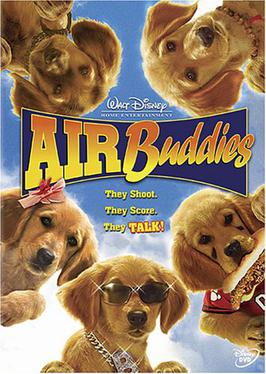
After retiring from Basketball, Football, Soccer, Baseball and Volleyball, the famed Golden Retriever Air Bud settles down with the dog across the street and has a litter of pups. But when the burden of raising Rosebud Budderball, Buddha, MudBud and B-Dawg becomes too much for the Framm family to bear, they are forced to break up the litter. Not wanting to go to puppy foster care, they decide to run away from home. A villainous group of exotic animal dealers, however, sees this as a $500,000 payday.
So... yeah. This happened.
If you have any love for your children, you will give them a far better childhood than this sad Air Bud spin-off franchise has to offer. You can identify the villain by his eye-patch and mangled German accent, so there's not really much more to say about it. I give it a 2.5, even lower than Grave Encounters 2! This puts it squarely in line with Bio-Dome, Dude, Where's My Car? and The Stupids. Becky, who very obviously enjoyed this far more than I did, gave it a 5.
Our lineup of random movies nears double digits with the addition of the 2012 horror movie Grave Encounters 2. Given how much we both enjoyed the first installment to the fledgling series, I could hardly argue with Becky's choice of this film for the bucket. Sadly, though, the best laid sequels gang aft agley.
Film student Alex Wright (Richard Harmon) is obsessed with the movie Grave Encounters. The more that he researches the making of the film, the more convinced he is that it is not just a movie, that it is real footage of what really happened to the crew of the tv series. Armed with their own set of cameras, Alex and friends Jennifer (Leanne Lapp), Jared (Howie Lai), Tessa(Stephanie Bennett) and Trevor (Dylan Playfair) track down the haunted hospital to uncover the truth behind Grave Encounters.
The preeminent flaw of Grave Encounters 2 is that it is under the impression that the first film is a cultural phenomenon like The Blair Witch Project, instead of the obscure little horror film that it actually is. The only people that I know who have seen it only did so because it was conveniently streamable on Netflix. The Vicious Brothers mistook "passingly entertaining" for "cultural tour de force." Grave Encounters is not The Blair Witch Project, not even The Human Centipede. It is merely "good enough" for a laid back Friday night scare.
In addition to the utterly pretentious, meta-cinematic premise, Grave Encounters 2 violates the cardinal sin of found footage films: thou shalt not force thy found framework on the film. This is something that The Blair Witch Project itself flirted with and Cloverfield violated. In an attempt to call back to the original film, director John Poliquin stretched the found footage premise to the point of disbelief, requiring diegetic cameras to be rolling far beyond when it was actually realistic to do so. It required no less than 16 video blogs, a student film, a student documentary about that student film, a spy camera, all of the cameras from the first film (set up in the hospital in the exact same locations as in the first film), a police car-mounted camera, a tv spot and revisited footage from the first film. Worst of all, none of this unrealistically elaborate framework did anything more than remind us of how well-done the found footage in the first film was by comparison.
Grave Encounters 2 also suffers from something that seems to be increasingly common in low-budget horror movies: an overly long opening segment. The film opens with a series of 15 YouTube reviews of the first movie (supposedly establishing it as an edgy, divisive, widely popular film: none of which is true), listlessly meanders into a footage from an insultingly stereotypical college party (in which the protagonist passes out while in drag and is repeatedly teabagged by his roommate) and finally comes to a head with footage from the protagonists own D-level horror movie "Slash 'n Burn," chased by over twenty solid minutes of research into the film Grave Encounters before they ever leave campus. The resulting thirty minutes of cross-dressing, drinking, drug use and sexual assault could easily have been condensed to ten minutes of setup and research, but it drags on for seemingly no other reason than padding the movie to 90 minutes.
So what does all of this build up to? Evidently the house watches Alex's vlog, including his unimpressed review of Grave Encounters and subsequent conviction that it is real. Encouraged by this turn of events, the house, using the username DeathAwaits666, leaves Alex a trail of bread crumbs to the supposedly non-existent hospital so that it can 1) kill his friends and 2) convince Alex to make a sequel to Grave Encounters.
That's it. That's the payoff. That is what they think is worth 90+ minutes of somebody's time. It's like Cartman pooping on Mr. Garrison's desk to avoid a fight at recess and hoping that nobody figures out why.
That all being said, the film is not entirely without merit, although it does skim dangerously close to just that. When they actually get to the hospital, they delve deeper into the workings of the building than its predecessor did. In the first movie, it was extremely easy to miss the trail of breadcrumbs that consisted of the film's back story. Those details are pleasingly expanded on in the sequel, adding additional context to the happenings of the first film.
The inclusion of the deranged and lobotomized Lance Preston (Sean Rogerson), the protagonist from the first movie, was Grave Encounters 2's only saving grace. His manic, scattered performance is outright exceptional: far better than this film deserves. Watching him dissolve into insanity, it is extremely easy to forget that outside of these two movies, his most notable role was Death Dealer #2 in Underworld: Evolution. His seamless transitions between lunacy and almost-sanity during his self-interview is fiendishly entertaining to watch.
Grave Encounters 2 is the very definition of a unneeded sequel that fails to understand why its predecessor was so enjoyable. The reappearance of Lance Preston is almost worth sitting through the rest of the movie for (almost). Ultimately, I would rate it a 3, putting it in line with fellow disappointments Book of Shadows: Blair Witch 2, Friday the 13th Part 2 and Dead Snow. Becky, ever the more generous between the two of us, rated it a 5.
Our fourth random movie was one of Becky's additions to our Netflix Bucket: the 2011 horror film Grave Encounters. Becky had seen this months ago and had been trying to get me to see it ever since. For some reason I was never really interested in it, despite being the kind of movie that I usually like. It turns out that it takes blind luck of the draw, rather than reasoned discussion, for her to get her way.
Like Ghost Hunters, Grave Encounters is a paranormal investigation show. The show's cast consists of host Lance Preston (Sean Rogerson), occult specialist Sasha Parker (Ashleigh Gryzko), psychic medium Houston Grey (Mackenzie Gray), cameraman T.C. Gibson (Merwin Mondesir) and technician Matt White (Juan Riedinger). For the latest episode of their show, they visit a haunted psychiatric hospital in Canada, where they lock themselves in overnight while they conduct a paranormal investigation. After a seemingly uneventful night, they become trapped in the hospital, terrorized by the very ghosts that they came looking for.
Grave Encounters, like the more famous Quarantine and Cloverfield, is a found footage horror film. In an attempt to create verisimilitude, the film has been shot in such a way as to appear authentic footage from a paranormal investigation. The only things that we see or hear as audience members are what the numerous cameras placed throughout the hospital (or carried by the protagonists) have shot. We are forced to literally adopt the perspective of the protagonists that, experience tells us, are all doomed. Their fear is made all the more palpable since the audience is fully immersed into the protagonists experiences.
The film is essentially a superior version of The Blair Witch Project. The updated premise ( a ghost hunting show) comes off as far less forced than its predecessor's (a group of students filming a documentary in the woods). The rotting fixtures, nonsensical graffiti, immersive shadows and labyrinthian hallways of the derelict psychiatric hospital were the best possible combinations of the impossible layout of The Shining's Overlook Hotel and Silent Hill's corrosive infrastructure.
While a large number of scenes in The Blair Witch Project unrealistically stretched the assumption that the characters themselves shot the footage (scenes where they bickered and argued with one another over where to hike or who was to blame for getting them lost). Realistically, the characters would either have been too absorbed in finding a solution to their problem or too angry with one another to record the increasingly bitter arguments for posterity. In Grave Encounters, however, the found footage premise never forces itself upon the action of the film. Since a number of cameras had been set up prior to the start of the investigation, it makes sense that there would be footage of events that the protagonists were otherwise too preoccupied to shoot themselves. Additionally, the basic premise of the film necessitated that they wanted to record proof of the paranormal, so it would only stand to reason that they would continue filming beyond the point that a group of college students working on an unrelated project would.
Grave Encounters also features a far more experienced and far more capable cast. The Blair Witch Project starred three purely amature actors. The film was the debut of actors Michael C. Williams and Joshua Leonard and it was actress Heather Donahue's first non bit-part. Their inexperience showed throughout the film, where they merely shifted from calm to angry to unconvincing bouts of crying. They succeeded in reading their lines and marching through the woods, but that was all. Grave Encounters' cast is vastly more experience, each credited with non-recurring tv and film roles. While the cast of The Blair Witch Project had difficulty conveying even simple emotions convincingly, this film's cast plays off one another with the ease of experience. Mackenzie Gray easily shifts between his duel roles of irreverent actor and dramatic spiritualist Houston Grey while Sean Rogerson embodies the charismatic, self absorbed Lance Preston with practiced deftness.
Grave Encounter's The Vicious Brothers show a greater and subtler ease helming their film than Eduardo Sanchez and Daniel Myrick did with theirs (despite both pairs having no previous directing experience). The frequent and seemingly random switches between color and black and white in The Blair Witch Project were needlessly jarring, preventing the fully immersive experience that the found footage genre seeks to create. The more-occasional (though still frequent) shifts between color and night-vision maintained Grave Encounter's verisimilitudinous qualities while eliciting the same unease and sense of "wrongness" that the green-tinted lights are commonly used for in horror films; it succeeds in creating tension without succumbing with unthinking ease into convention. Likewise, the use of fixed-position cameras at present locations offered a third-person perspective to the events of the film that The Blair Witch Project lacked.
Grave Encounters' one great fault is that the exact "whys" of the plot are not immediately evident after the first viewing. While they are there, they are threaded through heavy exposition in the form of interviews before the protagonists' overnight lock-in at the hospital. It is exceedingly easy to miss this information and even easier to forget it when the action of the film gets underway.
Overall, the film is an effective and entertaining addition to the found footage horror genre. It features far superior acting, directing and writing than The Blair Witch Project and far steadier camerawork than Cloverfield. Becky and I both give it a rating of 7, putting it on par with the aforementioned Cloverfield, Cabin Fever and bothFright Nights.
For our third randomly selected Netflix movie, Becky and I
saw Carrie, the 1976 horror film adapted from Stephen King’s first published
novel.Becky selected this particular
movie for the bucket mostly, I would imagine, because of her interest in seeing
the remake that stars Chloë Moretz and Julianne Moore (which we were able
to see together shortly after watching this movie).
Carrie White is a shy, awkward girl who simply does not fit in at
school.Despite being a senior in high
school, she gets her first period while showing after gym.Believing that she is bleeding to death, she
becomes hysterical and begs the other girls for help.Instead of calming her down, they laugh and
throw tampons at her while screaming “plug it up.” In the aftermath of this incident, Carrie begins to develop telekinetic powers, which her fundamentalist mother is convinced is witchcraft. One remorseful classmate, eager to atone for what she did to Carrie, convinces her boyfriend to ask the social outcast to Prom. Another classmate, however, enraged at her punishment over the incident, plans the ultimate way to humiliate Carrie.
The story of Carrie is far more tragic than it is
horrific.Like the more recent Let the Right One In, Carrie emphasizes the human violence done to its protagonist
rather than the supernatural violence that she inflicts on her tormentors.Carrie is a quiet, meek girl who is
mercilessly bullied by her classmates, physically and emotionally abused by her
mother and generally ignored by the teachers and administrators that could
otherwise have helped her.Even Ms.
Desjardin, her gym teacher, slaps her in a moment of supreme vulnerability in plain
view of her bullies.While Ms. Desjardin
later punishes the girls for what they did, it is only after she shows all of
them what you’re supposed to do to Carrie White.
If there was one this that the film could be faulted for, it
is the overly inventive direction of Brian De Palma.While I can appreciate the numerous directorial decisions that he makes in
presenting Carrie’s tragic story, they do keep the movie from aging
gracefully.During the montage where Tommy
and his friends choose which tuxedos to rent, rather than cutting from tux to
tux, De Palma fast-forwards through the "unimportant" parts.When Carrie’s own head is spinning from Chris’
unimaginably cruel prank, De Palma recreates this by using a rotating
kaleidoscope lens.During the carnage of prom night, De Palma uses a split screen to show co-current violence
against the students and faculty.
Some of these techniques worked very well; the split screen
particularly strikes me as well executed, evoking the chaos and confusion of
Carrie’s rampage.Most, however, are
distracting, dated and poorly executed.Taken as a whole, it is a visual cacophony that is far more
interesting than good.
The film features an absolutely outstanding cast. Sissy Spacek perfectly embodies the frightened, introverted Carrie White. She is alternatingly able capture the intense savagery of her rage and the complexity of her accompanying guilt. Piper Laurie plays what is by far the most terrifying character in the entire film: Mrs. White. While both she and Spacek channel the jilting, unnatural, overly-stylized body language of German Expressionism, Laurie excels well beyond Spacek in this capacity. She succeeds in creating what is by far the most unsettling on-screen presence since Max Schreck's Count Orlock, similar to Carrie's own physical mannerisms during her prom-night rampage.
Carrie is ultimately an incredibly good, though incredibly
dated, film.While De Palma’s unique
filming techniques do not hold up well in contemporary viewings, the tragic and
emotional core of the film (not to mention Spacek and Laurie's exceptional performances) does.I rate this film a strong 7.5, on par with I Walked with a Zombie, The Last House on the Left and Suspiria. Becky rates the film a 7.